The click is not the sale
The ad gets people to look. The page has to get them to book.
The ad gets people to look. The page has to get them to book.
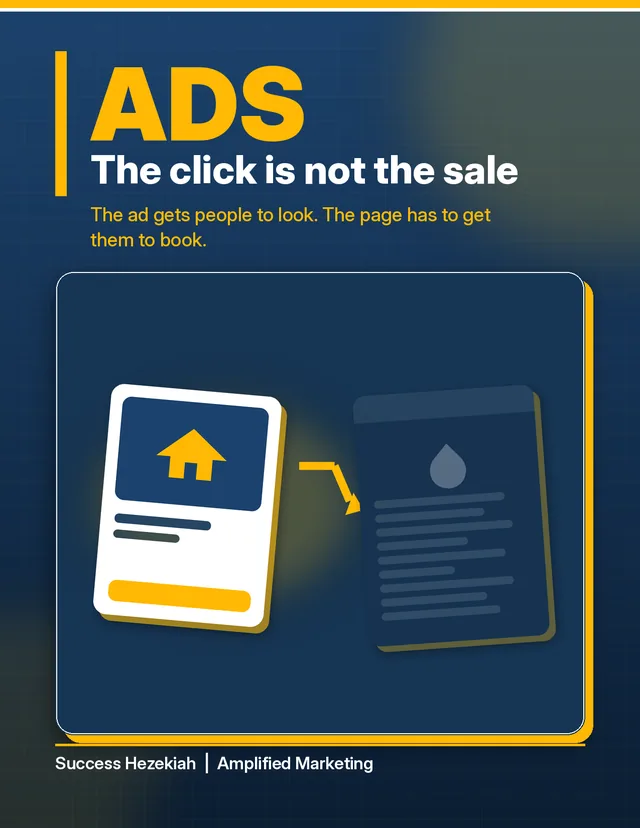
You run a local service business in your area. Getting the click and getting the lead are two different goals. A click is when someone taps your ad. A lead is a person who reaches out. Sending paid clicks to your plain home page wastes money. It also teaches the ads the wrong thing.
The inbox fills with soft inquiries while the calendar stays light on people ready to buy.
Here is what I see all the time. The ad is fine. People click. The owner sees lots of clicks and thinks the ads work. Then almost nobody books. The owner blames the ads and changes them. The same thing happens again.
Most of the time, the ad is not the problem. The problem is the few seconds after the click. The person lands on a page that does not feel like what they tapped. They have to hunt for what to do next. They see five menus, a story about the owner, and a contact page at the bottom. So they leave.
My rule is simple. The page has to keep the promise the ad made. And it has to make the next step easy to see. On Google, the person still has their question in mind. On Meta, the person was scrolling and was not looking for you. Meta runs Facebook and Instagram ads. There, the page has to keep going with what the ad started. Same rule, different rooms.
This guide shows you the what and the why. I am not giving you a page to copy or a build list. I will show you why the click is not the sale and where the promise breaks. I will show you why a bad page does more harm than losing one lead. You will also get my framework, a quick scorecard, and where I disagree with common advice.
At $500 USD per customer, ten clicks that land on the wrong page and never book is about $5,000 USD of broken promises.